Shaw Wins Big, But What Does “Local” Even Mean Anymore?
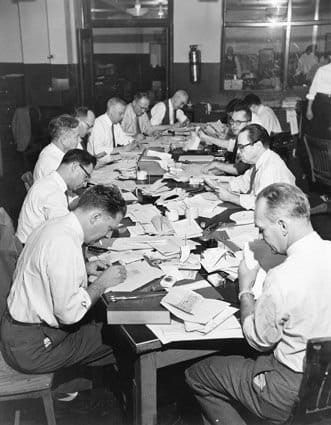
Shaw Local just took home 33 awards at the Illinois Press Association’s annual banquet—an impressive haul that included honors in photography, general excellence, opinion writing, and community service. The Daily Chronicle in DeKalb led the way with multiple first-place finishes, and The Times in Ottawa snagged a few certificates of its own. The accolades are well-deserved. The work is good.
But here in Streator? We can’t help but raise a skeptical eyebrow at the word “local.”
Shaw’s empire stretches across northern Illinois like a well-oiled syndication machine. From Crystal Lake to Princeton to Geneva, they operate dozens of outlets under the “Shaw Local” umbrella—producing coverage that is broad in geography, but increasingly thin in local context. And for communities like ours, tucked just south of Ottawa, the “local” part often feels more like a technicality than a truth.
When a tree falls in Streator and nobody from Shaw hears it—did it really happen? Maybe eventually, once the press release is typed up and approved.
Let’s be clear: the journalists themselves are not to blame. They’re doing excellent work, often under enormous pressure and limited resources. The real issue is structural—and cultural.
We live in a world where people expect everything for free. Local news, investigative reporting, in-depth features, daily coverage of school boards and street repairs… all just part of the scrolling scenery now. People scoff at the idea of subscribing to a newspaper while posting memes about how “journalism matters.” We pay $8 for Netflix and $12 for Disney+, but $14.99 per month for a "local" newspaper? Outrageous!
Of course, collapsing revenues lead to staff cuts and erode the ability of a paper to actually "be" local and eventually declining to pay for the no-longer-local paper feels justified. It's a vicious cycle.
The collapse of truly local journalism isn’t just about corporate consolidation. It’s about public apathy. It’s about the fact that Facebook rumors spread faster than facts, and that a post with 42 fire emojis gets more engagement than a well-researched council recap.
In the void, volunteer projects like The Streator Standard and community podcasts like We Are Here have stepped up. We’ve broken stories. We’ve filled in the gaps. Not because we’re professionals, but because somebody had to. Our local Facebook pages often post updates faster than major outlets. And in many cases, they’re the only ones posting.
So yes—congratulations to Shaw Local on their awards. They’ve earned them. But let’s not pretend that “local” means what it used to. And let’s not keep blaming big media for every gap in coverage, when so many readers have stopped investing in the very thing they claim to miss.
If we want journalism that actually knows our neighborhoods, we have to support it. Not just with “likes,” but with subscriptions, donations, and yes—even attention spans.
Until then, we’ll keep doing our part. Because Streator still deserves to be seen, even when the spotlight forgets to swivel this far south.
More to come...