Wake Up the Firemen: Streator’s News Vacuum on Full Display
Remember when the news had editors? When someone cross-checked a quote before it got aired? When the person reporting the story wasn’t also the person editing the video, hosting the interview, and guessing how microphones work?
Those days are gone. And what we have instead is Streator TV14.
Or is it Hope TV? Starved Rock TV? Gleam Network? Your guess is as good as ours, because even that wasn’t made clear in the latest video—a 25-minute public access odyssey featuring good-hearted hosts doing their best to explain complex issues like budget shortfalls, youth programming, police staffing, drug enforcement, economic development, mental health, and municipal tax policy.
Oh, and there’s a farmer’s market happening under the Westgate Plaza awning. No tents needed. Just vibes.
---
This Is the Future When the News Is “Free”
We all say we want local news, but fewer and fewer people want to pay for it. So what do we get?
We get broadcasts with no camera angles. No lower-thirds. No investigative reporting. No fact-checking. No editorial guidance. Just two people, a camera, and a whole lot of courage trying to unpack everything from crematorium zoning to why some tall kids don’t want to play basketball.
And no, this isn’t satire.
“Could we free up the fire department from their sleep duty to, you know, help out a little bit?” asked one of the hosts, completely sincerely.
That was the suggestion. Not more funding for police. Not community-led safety efforts. No, the proposed solution to street-level drug enforcement was: wake up the firemen. Let them handle it.
Because nothing says “thoughtful policy response” like dragging a guy out of bed at 3 a.m., handing him a taser and a flashlight, and wishing him luck.
---
Copy/Paste Journalism: Literally
The same people who won’t pay $14.99 a month for a Times subscription will gladly comment “COPY AND PASTE FROM THE PAPER” under every Facebook post, as if that’s a sustainable model for journalism.
They expect professional reporting to appear like magic—without contributing a dime—then act shocked when the newsroom runs out of reporters, or the only local “coverage” is a blurry livestream where someone suggests we “wake up the firemen” to fight crime.
You can’t cut journalism out of your budget and still expect to live in an informed community. What we’re left with isn’t a newspaper. It’s a rumor mill with Facebook admin privileges.
---
No One’s Getting Paid. But We’re All Paying For It.
There’s something both noble and tragic in the attempt. These aren’t bad people. They care. Deeply. But we’ve got to be honest. We’re watching an unfiltered broadcast where life-and-death issues are discussed between bites of grilled zucchini from the Westgate farmers market.
The broadcast is a cry for help from a town that once had structure and clarity. Now it has speculation about insurance policies on hypothetical water rides.
It has people who would rather post “copy and paste from the paper” in the comments than support the existence of an actual paper.
It has dreams of a better Streator… and a plan to realize them by rolling firefighters out of their bunks and telling them to handle domestic disputes.
---
When We Believe the Loudest Liars and Doubt the Quiet Truth
Somehow, we’ve arrived at a place where millions of Americans will put full faith in millionaires who scream on social media, but reflexively distrust a local journalist making $38,000 a year and chasing down city council minutes with a legal pad and a lukewarm coffee.
We’ve been trained to believe that journalists are the enemy—while hucksters, conmen, and reality TV strongmen are “telling it like it is.” It’s a stunning reversal of logic. The louder someone yells, the more honest we think they are. The more careful someone is with the facts, the more we assume they’re hiding something.
This is the rot cynicism creates.
It wasn’t always this way. Journalism was once held up as the Fourth Estate—a vital force for truth in a democracy. Not perfect. Not infallible. But essential. Reporters were watchdogs, not punchlines.
But now, we live in a world where shouting “fake news” is easier than reading the article. Where belief is shaped by memes instead of reporting. Where trust is given to the shameless and suspicion is reserved for those trying to get the story right.
And in that world, we lose more than just news—we lose our ability to know anything together. We trade shared facts for shared rage.
---
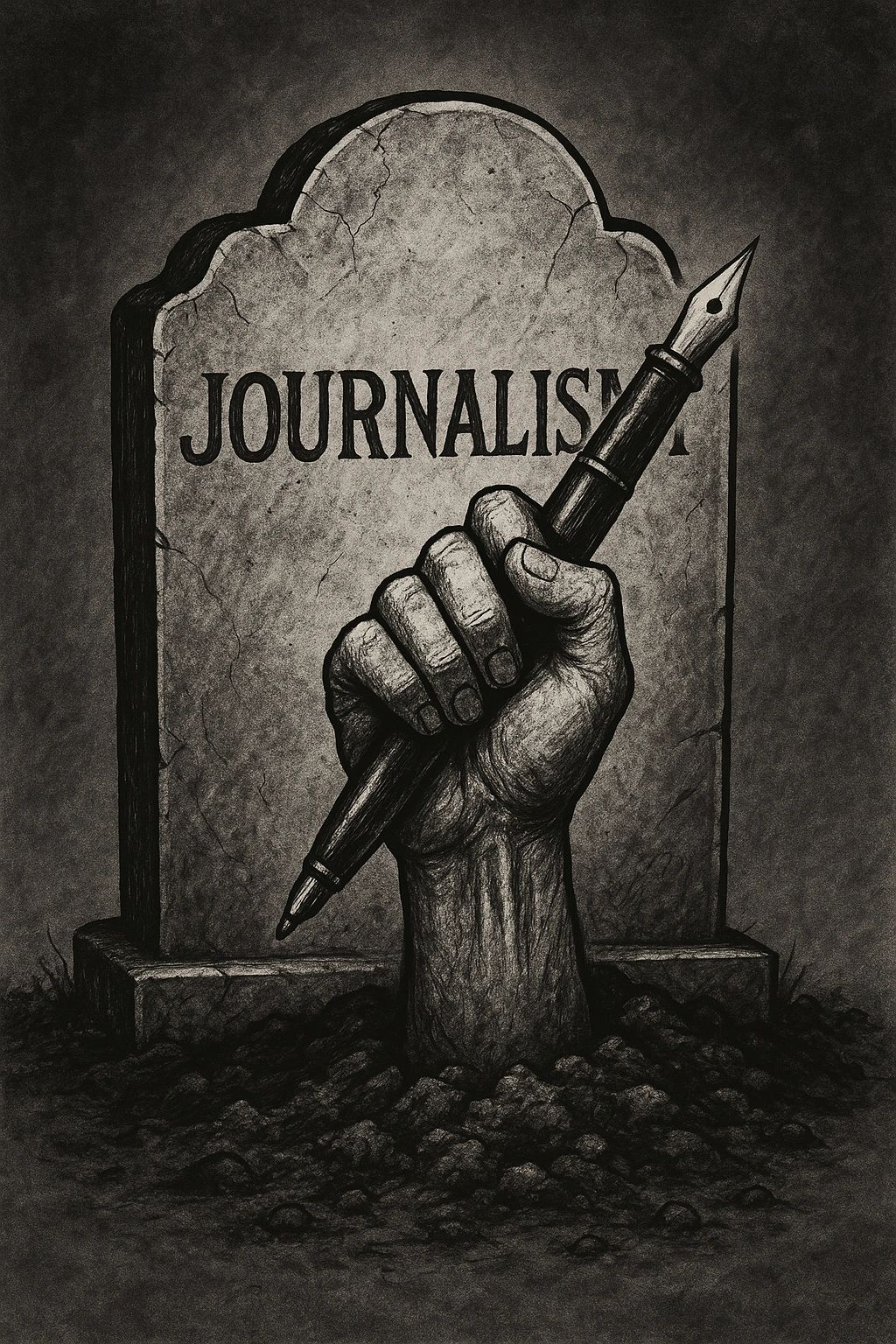
Journalism Matters. Even When It’s Gone.
You can’t get journalism for free. Not real journalism. Not the kind that asks questions at budget hearings, knocks on doors after a shooting, or connects dots between what’s being said and what’s really going on.
What we’re left with in its place is well-meaning people with no training doing their best to cover for an entire collapsed institution—and asking if firefighters should double as crime fighters.
Streator TV14 is not the problem. It’s the symptom.
The problem is a society that cheered when the watchdog was muzzled—and then got mad when no one barked.
---
The truth doesn’t scream. It doesn’t rant. It doesn’t flatter.
It just waits—quietly—for people who still care enough to go looking for it.