What Makes a Town Feel Alive?
Some towns feel alive before you can explain why.
You notice it before you analyze it. Cars parked downtown. Music coming from somewhere. A line at a restaurant. Kids at a park. People walking with coffee. A sign in a window. Lights on after dark. A farmers market. A concert. A ballgame. A festival. A garden tour. Someone sweeping a sidewalk. Someone unlocking a storefront. Someone putting out chairs before an event.
None of those things, by itself, changes the future of a town.
Together, they create something harder to measure and easier to feel.
Momentum.
The urbanist William H. Whyte, who spent years studying how people actually use public spaces, once put it simply: “What attracts people most, it would appear, is other people.”
That idea applies to more than city plazas and sidewalks. It applies to small towns.
People want to be where life is already happening.
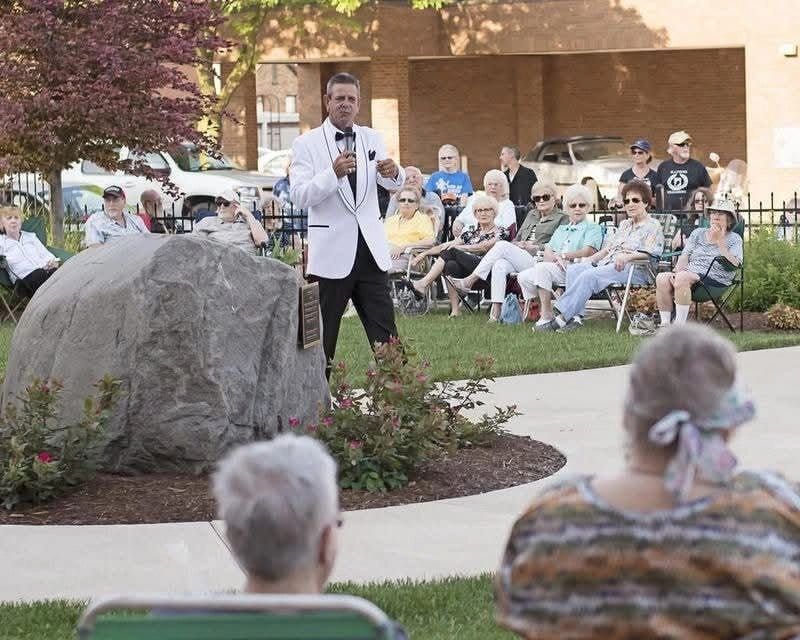
A restaurant with cars outside feels more inviting than an empty one. A downtown with music feels different than a downtown with dark windows. A park with families in it feels safer and more valuable than a park no one uses. A festival with a crowd makes people want to join the crowd.
Activity creates more activity.
A town feels alive when people can see other people participating in it.
That may sound simple, but it is one of the most important parts of small-town life. Streator does not become stronger only through one major announcement, one new employer, one grant, one building project, or one public meeting. Those things are important. But the daily feeling of a community comes from smaller signals that tell residents and visitors the same thing: something is happening here.
That kind of energy changes how people see a place.
People are more likely to invest in a place that feels active. They are more likely to open a business, fix up a building, move into a neighborhood, volunteer for an event, attend a meeting, or bring their kids downtown when they believe the town is not just surviving, but moving.
The opposite is also true.
When a town feels quiet too often, people begin to assume decline is inevitable. Empty windows feel emptier. Parks feel more neglected. Public meetings feel more hopeless. A closed business feels like proof of something larger. A complaint online becomes easier than an attempt to build something in real life.
That is why civic life is not just about government. It is also about atmosphere.
Streator has more of that atmosphere than people sometimes give it credit for.
It shows up when music brings people downtown on a summer night. It shows up when classic cars, families, food, and conversation turn the streets into a gathering place. It shows up during festivals, when the town briefly becomes a destination. It shows up at farmers markets, library programs, school events, youth sports, fundraisers, local bars and restaurants, concerts, garden tours, and in the small events that rarely make big headlines but help keep the calendar full.
These things are sometimes treated as extras.
They are not extras.
They are part of the infrastructure of community.
Roads, sewers, police, fire protection, and utilities are essential. No serious person would argue otherwise. But a town also needs places and moments where people actually encounter each other. A park is not just grass. A library is not just books. A festival is not just entertainment. A downtown is not just a collection of buildings. A local restaurant is not just a place to buy food.
These are the places where a town recognizes itself.
Small towns have a particular challenge. They cannot rely on constant foot traffic the way a big city can. They do not have endless density, endless entertainment, or endless public money. Activity has to be created on purpose. It has to be organized, promoted, staffed, funded, attended, and repeated.
That means a lively town is not an accident.
It is the result of people doing the unglamorous work.
Someone books the band. Someone applies for the permit. Someone sponsors the banner. Someone cleans the park. Someone coaches the team. Someone writes the grant. Someone staffs the booth. Someone opens the doors. Someone takes the risk of starting a business. Someone buys the ticket. Someone shows up even when the weather is bad or the crowd is smaller than hoped.
The public usually sees the event.
It rarely sees the work behind it.
That is one reason small-town criticism can become so unbalanced. It is easy to look at a town and list what is missing. More stores. More restaurants. More activities for kids. Better parks. More downtown businesses. More entertainment. More housing. More jobs. More things to do.
Many of those criticisms are fair.
But the next question has to be: who is going to help create them?
A town does not feel alive because residents wish it did. It feels alive because enough people decide to participate. Not everyone has to lead a committee or run for office. Participation can be smaller than that. Attend the concert. Shop at the store. Eat at the restaurant. Take the kids to the library. Volunteer for two hours. Sponsor a youth team. Invite friends to an event. Share accurate information. Clean up your property. Thank the people doing the work. Go to the meeting before you are angry.
Those small acts do not solve every problem.
But they change the temperature of a town.
They make it easier for the next person to try something.
This is especially important for downtown Streator. Downtowns are fragile because they depend on habit. People have to get used to going there. They have to believe there will be something to do, somewhere to eat, something to see, or someone they might run into. One event can help. A single business can help. But the real goal is repetition.
A downtown comes back to life when activity becomes normal.
That does not happen overnight. It does not happen because of one Facebook post. It does not happen because city hall wants it to happen. City government can help with infrastructure, ordinances, incentives, public spaces, and basic services. But it cannot manufacture civic energy by itself.
That part belongs to the community.
The same is true for parks, schools, festivals, youth programs, arts events, and public spaces. If people use them, they grow stronger. If people ignore them, they fade. If people only complain about them, nothing changes. If people participate, even imperfectly, the town gains another point of life.
Streator does not need to pretend everything is fine.
There are real challenges here. Old buildings are expensive to restore. Some neighborhoods need reinvestment. Businesses face thin margins. Volunteers burn out. Public budgets are limited. Young people often wonder whether there is enough opportunity to stay. Families want more options. Residents want visible progress.
Those challenges should be discussed honestly.
But honesty also requires noticing what is already working.
A town that still has people willing to organize, volunteer, perform, sponsor, coach, serve, rebuild, plant, clean, host, teach, and open the doors is not a dead town. It is a town with raw material.
The question is whether that raw material can be turned into momentum.
What makes a town feel alive is not perfection. It is participation.
It is the sense that people are still willing to make an effort.
It is the sound of music downtown. The lights on in an old building. The kids at the park. The line at the food stand. The volunteers setting up before anyone arrives. The business owner trying again. The neighbor who shows up with tools. The resident who decides that complaining is not enough.
Streator will not be built by spectators.
No small town is.
A town feels alive when its people stop waiting for proof that things are getting better and become part of the proof themselves.