Streator’s Streets: Fixing Less Than We Break
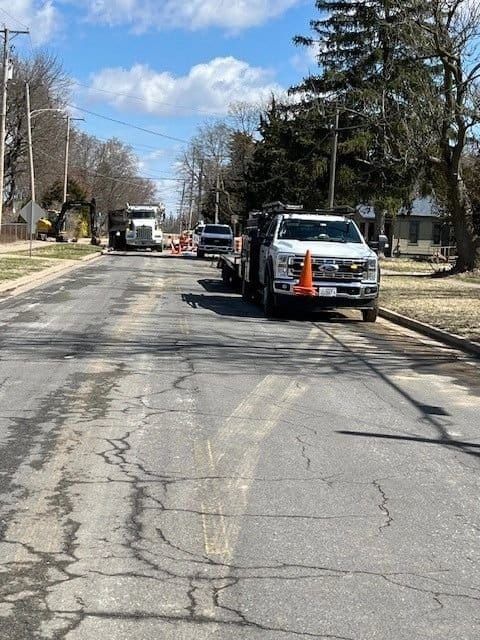
In a bold display of 21st-century infrastructure strategy, the City of Streator continues to repair its roads at a rate that’s just slightly slower than the rate they are falling apart. Officials say this delicate balance allows residents to enjoy both progress and potholes in equal measure.
At Monday’s city council meeting, Public Works Director Jeff Long delivered what could only be described as a masterclass in managed decline.
“We’re definitely out there making repairs,” Long told the council. “Unfortunately, every time we fix one street, two more seem to crumble out of spite.”
The city’s current road repair plan is simple: patch the worst of the worst, hope it holds, and pray that the rest doesn’t collapse until at least next fiscal year. By that time, they’re optimistic some sort of federal funding—or a miracle—might show up.
“We are operating on what we call a ‘just-barely-in-time’ system,” said one city planner. “It’s a cutting-edge strategy where we wait until the road is about 60% gravel and 40% memory before doing anything.”
The numbers back it up. Last year, the city resurfaced 2.3 miles of road. During the same period, an estimated 3.1 miles entered what experts refer to as “the oatmeal phase,” where asphalt becomes indistinguishable from breakfast porridge.
For longtime residents like Brenda Montgomery, the slow pace of street repairs is more than an inconvenience—it’s a local tradition. “We used to name potholes,” she said. “I miss Carl. He had his own Facebook page.”
But city officials assure citizens that help is on the way… eventually. “We’ve identified dozens of roads that need attention,” said Mayor Tara Bedei. “Now all we need is money, crews, equipment, asphalt, time, political will, and cooperation from the weather. We’re halfway there.”
In the meantime, Streator’s more adventurous drivers are embracing the challenge. Local Jeep owners have begun hosting informal off-roading events on East Lundy and South Everett, while cyclists have taken to calling their commutes “gravel grinding.”
If nothing else, the city’s crumbling roads serve as a useful speed control mechanism, replacing the need for costly speed bumps with naturally occurring asphalt chaos.
And let’s not forget the hidden benefit to car repair shops, tire dealers, and anyone with an alignment machine. “It’s a jobs program, really,” said one mechanic, who asked to remain anonymous while replacing a third shattered strut in a single day.
At this rate, Streator’s streets may never be smooth—but they will always be memorable.