
The Bridge, the Bribe, and the Mayor
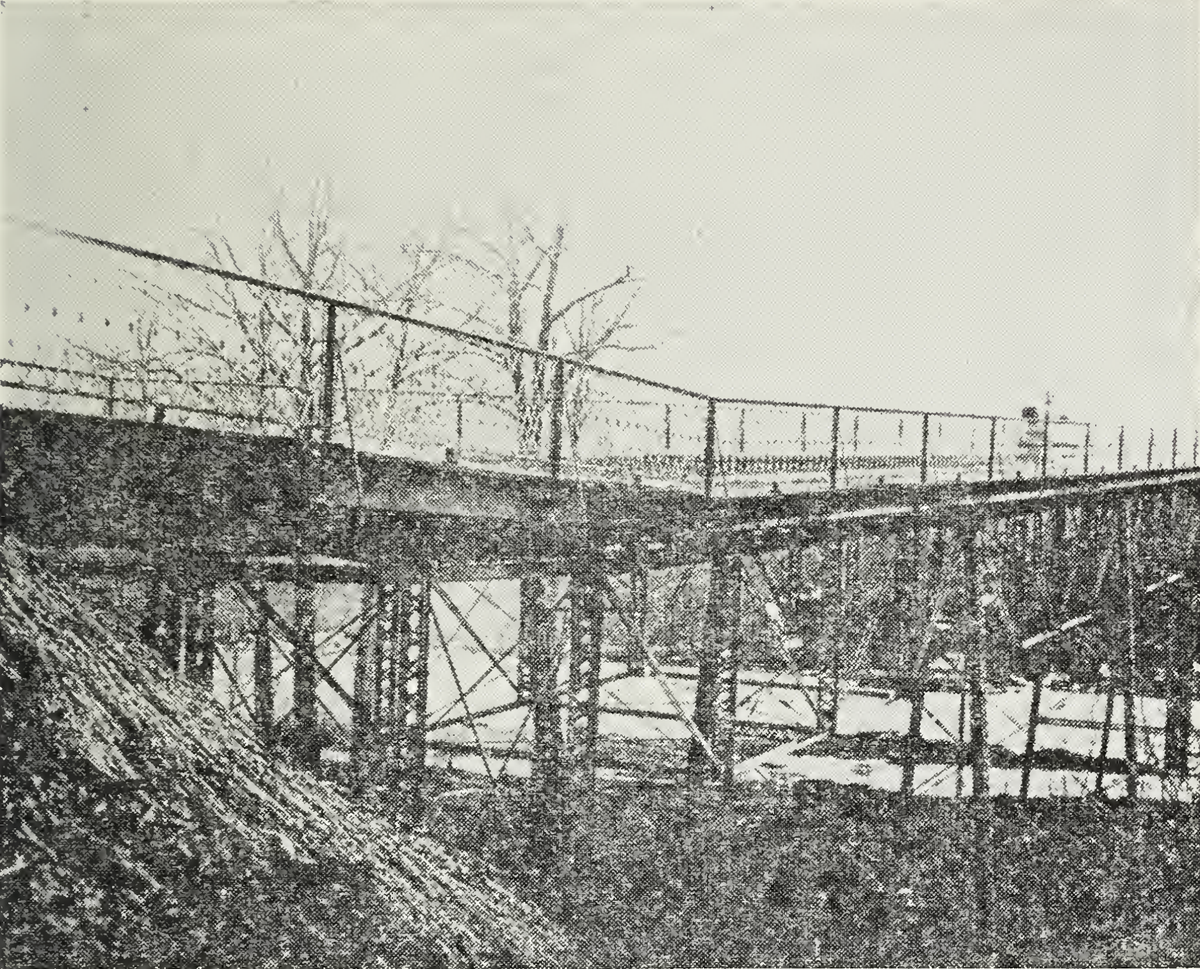
For years, Streator argued about building a bridge across the Vermilion River at Main Street. In the summer of 1898, it finally got one.
Within a few years, it was gone.
It hadn’t washed away. The city hadn’t outgrown it.
The company that built it took it back.
Before that happened, an alderman would admit selling his vote, a mayor would refuse to sign the payment bonds, and a jury would award the contractor its money anyway.
The story began with a question for Streator’s voters.
In July 1897, they were asked whether the city could borrow $25,000 to build the bridge. Streator would raise the money by selling bonds, which it would have to repay with interest.
The recorded vote was 846 in favor and 831 against. The borrowing passed by a margin of 15 votes.
The bridge would be built.
Opponents tried to stop the project in court, but construction went ahead. The Lafayette Bridge Company got the job for $24,800, and the city went to court to acquire the land needed for the bridge and the roads leading to it.
By August 1898, the bridge was almost finished.
Whether anyone would be allowed to cross it was another matter.
The barricades went up. Then they disappeared.
The Streator Daily Free Press reported that the company had received $8,000 before starting work. But more money was in dispute, and the contractor appeared reluctant to open the crossing.
“It is not likely that the Lafayette people will open it to travel until they receive some coin,” the paper observed on August 4.
Then the city decided it might want to keep people off, too.
At the August 15 council meeting, Mayor William W. Bean argued that Streator hadn’t accepted the bridge and could face trouble if someone got hurt. A motion to barricade it split the council evenly.
Bean cast the deciding vote.
The meeting dragged past one in the morning. A storm raged outside while the mayor pounded his desk inside.
“The mayor thumped his desk in an endeavor to quell the riot,” the Free Press reported, as “the thunder boomed and the rain descended in torrents.”
The barricades went up.
Then they disappeared.
“The barricade at the new bridge had disappeared again this morning,” the paper reported three days later. Someone was trying to discover who kept moving them.
Meanwhile, people were crossing—and the neighbors could hear them.
By late August, residents complained that teams crossing the bridge at night made so much noise it destroyed their rest. A petition was expected at the council asking that the bridge be carpeted.
In September, the company notified the city that the work was complete and it wanted its pay.
The council placed the letter on file. The payment dispute continued.
Five hundred dollars on the train home
The trouble had begun before the first stone was laid.
On September 13, 1897, nearly a year before the Main Street bridge was completed, Alderman John C. Dawson traveled to Chicago to inspect bridges. Lafayette Bridge Company agent J. H. Beeker had encouraged the trip.
Dawson would later tell a courtroom what happened on the way home.
As the train approached Richards’ station, about four miles outside Streator, Beeker entered the smoking car and sat beside him.
He handed Dawson $500.
It was payment for his vote on the bridge contract.
Dawson returned to Streator, went directly to that evening’s council meeting, and voted for the Lafayette company.
When word of the payment surfaced, he denied it.
But, according to the Free Press, “the matter preyed heavily upon his mind.” Eventually, he went to the city’s attorneys, Reeves & Boys, and confessed.
In December 1898, Dawson told his story under oath in court in Ottawa.
A company attorney questioned him hard. He became confused about some details, the newspaper reported, but never backed away from the payment.
And there was the matter of a witness.
J. E. Howland, who had accompanied Dawson on the Chicago trip, testified that he saw Beeker count out the money and give it to him.
Another alderman, Dr. M. B. Jennings, described offers he had refused.
First, $200. Then $500.
Would $1,000 persuade him?
It would not.
Someone tried offering him a job instead: $500 to look after people injured during construction, provided he voted to award the contract to the company.
Jennings declined that, too.
The signature the company couldn’t get
Mayor Bean had opposed the bridge project from the start. According to John E. Williams’s later history, The Story of Streator, the company obtained enough council votes through bribery to get it built over his objections.
But there was still something the company needed from the mayor.
His signature.
Streator planned to pay for the bridge with borrowed money. When the bonds came to Bean, he refused to sign them.
Without his signature, Williams wrote, they couldn’t be sold.
The contractor had a finished bridge and a mayor blocking the borrowing intended to pay for it.
So the company went to court.
Its argument was straightforward enough: Streator had helped get the project through legal challenges, insisted that construction proceed, and now had a bridge people were using.
The company expected payment.
The city answered that a contract obtained through bribery should not bind its taxpayers.
In 1899, the contractor offered to settle for $14,750.
The council refused.
Then, in January 1901, a federal jury awarded the company $24,800.
The entire contract price.
After an alderman admitted selling his vote, after another described the offers he had refused, and after the mayor withheld his signature, the contractor had won a verdict anyway.
“Where Is Beeker?”
Streator’s lawyers asked for another trial.
Judge Christian C. Kohlsaat granted one, on condition that the city pay the court costs. The council paid $321, and the case was expected back in court that October.
By then, the company had another problem.
“Where Is Beeker?” the Streator Free Press asked in September.
The paper reported that the bridge agent had left for “parts unknown.” He was said to fear that the company intended to make him its scapegoat if the next trial went badly.
The city’s attorneys, meanwhile, had reportedly found important new evidence supporting the bribery accusations.
By late October, Beeker had been located.
He was in the Kankakee jail, charged with obtaining money under false pretenses.
On October 27, Streator’s attorneys met the company’s lawyers and told them about testimony they planned to present.
The next morning, the company asked to drop its own lawsuit.
The Daily Free Press reported that Beeker had made “a complete confession,” prompting the company to abandon its lawsuit.
The agent who had helped secure the contract had now helped sink the company’s case.
The second trial never happened.
The company would pay the litigation costs. The court declared the bridge its property and gave it six months to remove the structure or forfeit it to Streator.
It also had to close the crossing within ten days.
A crew went to work the following day.
Rest in the scrap pile
Former Alderman H. H. Mulford had supervised laying the bridge’s stone abutments—practically the first work on the project.
Now he was helping close it.
On October 29, his crew tore up planks near both ends and removed sections of iron railing to block the entrances. Travelers would have to use the Bridge Street crossing.
By then, the bridge was showing what three years of disputed responsibility could do.
Streator had never accepted it. Signs at both ends said so.
People used it anyway.
“Not a nut on the bridge has been tightened since it was thrown open,” the Free Press reported after the closing.
Bolts had loosened and fallen off. Paint peeled away in crusts. The iron rusted. The bridge had become less rigid, although the paper noted that many residents thought it hadn’t been particularly rigid to begin with.
One supporter, A. S. Corbin, was believed to have been patching holes in the wooden planks himself.
With the bridge closed, the newspaper observed, he was out of a job.
The paper offered its own verdict on the whole affair: “To some people it certainly has proven a ‘bridge of sighs’—to others merely a bridge of size.”
The company chose to take the bridge away.
In March 1902, its representative arrived to arrange removal of the ironwork.
“In a few weeks this notable structure will be no more,” the Free Press announced.
Then it supplied a farewell suited to the occasion:
“Requiescat in scrappileorum!”—roughly, “May it rest in the scrap pile.”
Main Street eventually got another crossing.
Mayor Bean received a different kind of memorial. Citizens presented him with a gold watch inscribed November 6, 1901, recognizing his courage and honesty as mayor.
The company had bribed the council, built the bridge, and won a verdict. But it had never gotten his signature.